

 Tiếng Việt
 中文 (中国)
Over the past 40 years of economic reform, Vietnam’s agricultural exports have recorded remarkable growth in both scale and quality. Entering 2026, the agricultural sector has outlined a comprehensive set of solutions to maintain growth momentum, with export revenue targeted at USD 73–74 billion.
Export Value Surpasses USD 70 Billion
According to the Ministry of Agriculture and Environment, prior to 1986 Vietnam’s agricultural exports were modest, mainly conducted through barter trade within socialist countries, with annual export turnover below USD 1 billion.Following the launch of the Doi Moi reforms, particularly during the 1990-2000 period, agricultural exports expanded rapidly at an average annual growth rate of 15–20%. Export turnover reached approximately USD 4.5 billion in 2000, positioning Vietnam among the world’s leading rice exporters.
The 2001-2010 period marked significant progress in both scale and quality, with export revenue rising from USD 3.1 billion to over USD 19.5 billion. Several products achieved high global rankings, including coffee, pepper, cashew nuts, rice, and seafood. During 2011- 2020, despite the impact of the global financial crisis, agricultural exports continued to grow, reaching USD 42.3 billion in 2020. Export structure shifted positively, with a higher proportion of processed products and a gradual reduction in raw commodity exports.
From 2021 onward, amid global disruptions caused by pandemics, geopolitical conflicts, and climate change, Vietnam’s agricultural sector has demonstrated strong adaptability. Export turnover of agro-forestry-fishery products increased from USD 48.6 billion in 2021 to USD 62.5 billion in 2024, exceeding USD 70 billion in 2025. Trade surplus surpassed USD 20 billion, reaffirming agriculture as a key pillar of the economy.
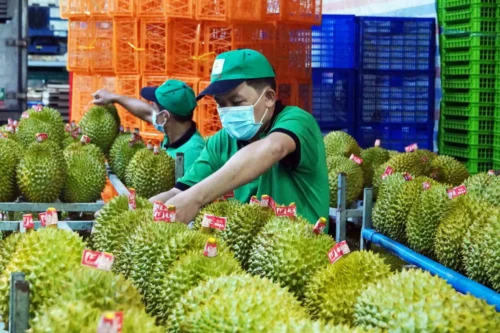
Strong Shift from Quantity to Quality
In recent years, Vietnam’s agricultural exports have increasingly shifted from volume-driven growth toward quality-oriented development, contributing significantly to economic growth, trade balance stability, and improved rural incomes.Vietnamese agricultural products are now exported to more than 196 countries and territories. Growing domestic and international demand, driven by urbanization, population growth, and rising incomes, has supported this expansion.
In addition, Vietnam’s participation in and implementation of 17 free trade agreements (FTAs) have opened vast market opportunities, enabling deeper penetration into major and high-potential markets.Deputy Minister of Agriculture and Environment Phung Duc Tien emphasized that 2026 marks the first year of implementing the Resolution of the 14th National Party Congress and the five-year socio-economic development plan for 2026-2030.
Based on Government Resolution No. 01/NQ-CP, the ministry has outlined key tasks, including improving institutional frameworks, simplifying administrative procedures, and enhancing the business investment environment. To achieve export growth targets in 2026, the agricultural sector aims to enhance international integration efficiency, promote trade facilitation, leverage FTAs to expand market access, and diversify supply chains and export markets while improving product quality.
The ministry will also closely monitor global developments, proactively assess changes in major countries’ trade policies, and timely propose appropriate responses to promote trade and exports.Simultaneously, support measures will be intensified to help farmers and enterprises restructure production, adapt to new markets, strengthen supply chain autonomy, and enhance value addition and competitiveness of Vietnamese agricultural products.