

 Tiếng Việt
 中文 (中国)
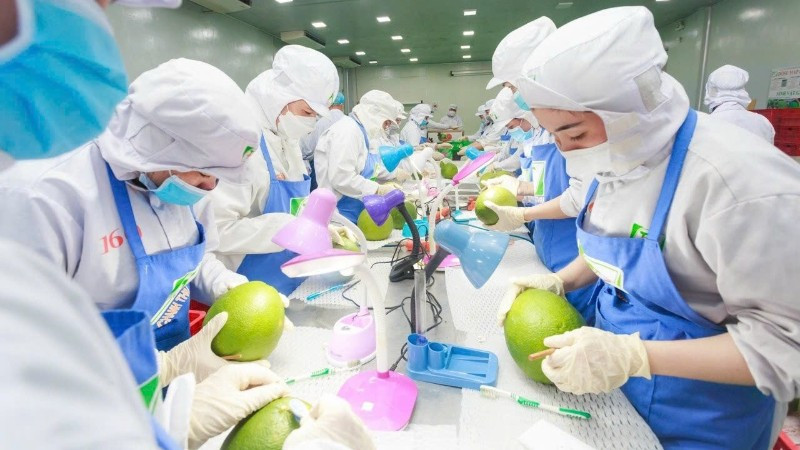
In the agricultural sector, the Prime Minister emphasized the need to accelerate deep processing and actively promote negotiations and the signing of new free trade agreements (FTAs) to open up potential markets, particularly in the Middle East, Africa, and Central Asia. These are considered key strategies to enhance the added value of Vietnamese agricultural products and reduce dependence on traditional markets. According to the Vietnam Fruit and Vegetable Association (VinaFruit), in the first nine months of 2025, Vietnam’s fruit and vegetable exports reached approximately US$6.11 billion, an increase of 8.3% year-on-year, with a trade surplus of more than US$4.2 billion. VinaFruit Secretary General Dang Phuc Nguyen noted that this growth was mainly driven by the recovery of exports to China in August and September. However, in the first eight months of 2025, exports to China still declined by 9.3% compared to the same period last year, totaling nearly US$2.8 billion, underscoring the sector’s heavy reliance on the Chinese market. Nguyen remarked that fluctuations in Chinese demand or changes in quarantine regulations could significantly impact the entire industry. Therefore, promoting deep processing to expand exports to high-demand markets such as Europe, Japan, and the Middle East is now an urgent priority for Vietnamese agribusinesses.
The Import-Export Department under the Ministry of Industry and Trade reports that the global processed fruit and vegetable market is experiencing stable growth due to rising demand for convenient food products. The market is valued at US$77 billion in 2025 and is projected to reach US$111.6 billion by 2035, with an average annual growth rate of 3.8%. Within this, the frozen fruit and vegetable market is expected to nearly double from US$4.9 billion in 2025 to US$9.4 billion in 2035, while the canned fruit market will reach around US$22.1 billion by the same year. This presents a major opportunity for Vietnamese enterprises to diversify processed products, reduce dependence on fresh produce, and strengthen their competitiveness in global markets. Beyond fruits and vegetables, other agricultural sectors must also shift from raw production to deep processing to broaden market opportunities. For instance, in the coffee industry, the implementation of the European Union Deforestation Regulation (EUDR) poses new challenges for exporters in the EU market. Consequently, tapping into emerging markets with rising demand for processed coffee has become essential.
In Japan, one of the largest and most stable coffee consumers in Asia, the industry’s revenue reached approximately US$5.43 billion in 2024 and is expected to increase to US$5.66 billion by 2033, representing an average annual growth rate of 0.47%. The instant coffee segment remains dominant, with projected revenues of US$3.87 billion in 2025, rising to US$4.56 billion by 2030, an average growth rate of 3.32% per year. In Australia, coffee consumption averages 1.9 kilograms per person per year, with instant coffee accounting for 75% of total consumption, alongside rapid growth in specialty and concentrated coffee for home use. Reflecting this trend, in the first seven months of 2025, Vietnam’s processed coffee exports reached US$1.02 billion, up 64% year-on-year, demonstrating strong growth momentum driven by value-added processing. Alongside production, trade promotion activities in new markets have also intensified. According to Commercial Counselor Ta Duc Minh of the Vietnam Trade Office in Japan, at the end of September, several Vietnamese enterprises participated in the Tokyo Big Sight International Coffee Exhibition, one of the largest coffee events in Asia, featuring over 450 exhibitors and attracting more than 70,000 visitors. Vietnam’s high-quality green beans, roasted coffee, specialty blends, and processed coffee products drew significant attention from premium importers, paving the way for new trade partnerships. Not only coffee and fruit, but Vietnam’s seafood industry is also capitalizing on the opportunities created by new-generation FTAs. According to the Vietnam Association of Seafood Exporters and Producers (VASEP), in the first eight months of 2025, member countries of the Comprehensive and Progressive Agreement for Trans-Pacific Partnership (CPTPP) led import growth for Vietnamese pangasius (tra fish), with total imports reaching US$242 million, up 36% year-on-year. Markets such as Japan, Canada, Mexico, and Chile recorded stable demand, particularly for processed pangasius products. In South America, Brazil, considered the gateway to the region, imported US$118 million worth of Vietnamese pangasius by the end of August 2025, marking a 54% increase year-on-year. These figures highlight South America’s emergence as a promising new destination for Vietnamese seafood, helping diversify markets and enhance export resilience.
Meanwhile, the Middle East is also emerging as a “golden destination” for Vietnamese agricultural products. According to First Secretary Truong Xuan Trung from the Vietnam Trade Office in the United Arab Emirates (UAE), once the Vietnam–UAE Comprehensive Economic Partnership Agreement (CEPA) takes effect, 99% of Vietnam’s exports to the UAE are expected to enjoy tariff exemptions. This will create a tremendous opportunity for Vietnamese agricultural goods to penetrate deeply into the Middle Eastern market, where consumer purchasing power and demand for high-quality, Halal-certified products are both substantial. To fully capitalize on CEPA’s benefits, enterprises must proactively improve production processes, enhance product quality, and comply with international standards thereby reinforcing the global reputation of Vietnamese agriculture. With strong government direction and proactive innovation from enterprises, Vietnam’s agricultural market expansion is not only aimed at boosting export turnover but also at achieving sustainable development, increasing value-added production, building a national brand, and solidifying Vietnam’s position as a regional hub for high-quality agricultural processing and supply.
(Source: Compiled)