

 Tiếng Việt
 中文 (中国)
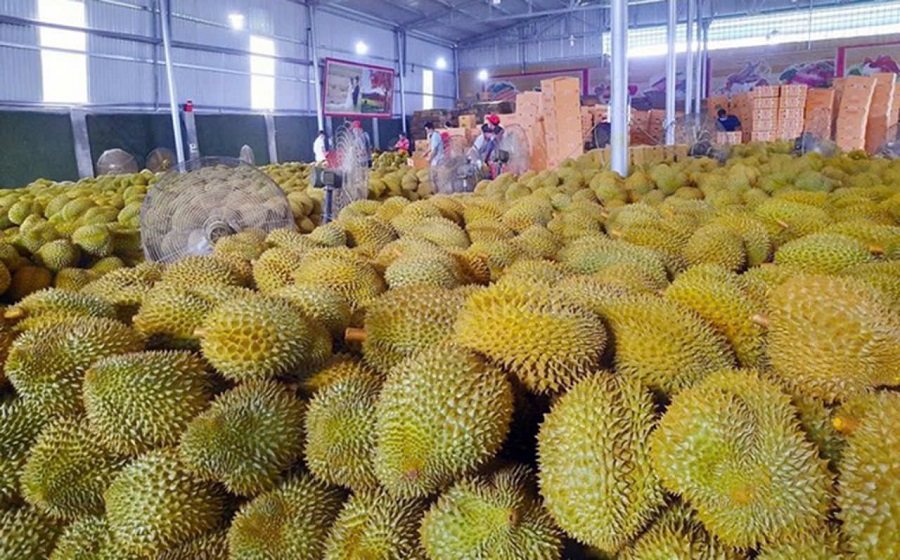
Durian prices today (January 15) across major growing regions in Vietnam continue to remain stable. Among them, Thai durian Grade A maintains a high price level, commonly above VND 110,000 per kilogram. The domestic market shows no significant short-term fluctuations, although the outlook of the durian industry is increasingly influenced by export requirements, quality standards, and regional supply pressures.
Domestic market: Stable prices with strong performance in premium segments
In the Mekong Delta, including key durian-producing areas such as Tien Giang, Cai Lay, and Dong Thap, prices have remained largely unchanged compared to previous days. Thai durian continues to dominate the high-end segment, while other varieties trade at steady but quieter levels.
Grade A Thai durian is currently purchased at VND 105,000–115,000/kg, depending on fruit quality and compliance rates. Lower grades remain stable, with Grade B at VND 85,000–95,000/kg and Grade C at around VND 56,000–60,000/kg. Ri6 durian trades at VND 70,000–74,000/kg for Grade A, while Musang King Grade A remains at VND 110,000–115,000/kg. Overall, domestic demand and supply are relatively balanced, preventing sharp price movements in the short term.
Export growth and rising quality pressures
In 2025, Vietnam’s total fruit and vegetable exports were estimated at USD 8.6 billion, up nearly 20% year-on-year. Durian remained the leading export product, generating approximately USD 4 billion, accounting for 40–45% of the sector’s total export value.Entering 2026, durian continues to be identified as a strategic agricultural export commodity. However, rapid growth has been accompanied by increasingly strict technical barriers from importing markets, particularly related to food safety, pesticide residues, heavy metals, and traceability requirements.In practice, several durian shipments have faced warnings or rejections due to non-compliance with these standards, highlighting systemic issues that cannot be addressed solely at the final stage of the supply chain.
Regional developments: Oversupply pressures from Malaysia
A notable regional development is the localized oversupply of durian in Malaysia. This situation does not stem from weakening demand but rather from quality shortcomings in the export segment.Most of the excess supply comes from clonally propagated durian varieties, including Musang King, harvested from orchards with trees under 10 years old. Fruit from younger trees often fails to reach full physiological maturity, resulting in inferior texture, aroma, and fat content that do not meet the standards of major markets such as China and Singapore.
As a result, rejected export shipments have been redirected to domestic markets, putting downward pressure on prices. Currently, cloned durian prices in Malaysia have fallen to around 15–20 ringgit per kilogram (approximately USD 3.2–4.3/kg), significantly lower than in previous years.While traditional and high-quality local durian varieties continue to find market outlets, they are indirectly affected by negative market sentiment and competition from lower-priced supplies.