

 Tiếng Việt
 中文 (中国)
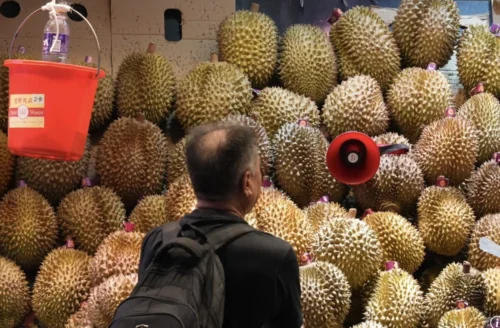
The export of durian to China is entering a more intense competitive phase as Laos has officially received approval to export fresh durian to the Chinese market. The participation of this neighboring country is seen as a new factor that significantly increases durian competition, especially for Vietnam, which currently holds the second-largest market share in China.
According to China’s General Administration of Customs, Laos was granted permission to begin exporting durian to China starting last Friday, provided that shipments meet strict phytosanitary requirements. This milestone marks the expansion of China’s durian market while simultaneously intensifying durian competition across the region.
Advantages That Make Laos a Strong Contender
Analysts believe Laos has several advantages that support its entry into the export of durian to China. First is its low labor and land costs, enabling Lao exporters to maintain competitive pricing. As durian competition increasingly centers on cost efficiency, this advantage allows Laos to gain rapid access to Chinese consumers.
In addition, the newly launched Vientiane–Kunming railway plays a critical role in reducing logistics costs. According to Mr. Lim Chin Khee, advisor to Malaysia’s Durian Academy, logistics is the most crucial factor in the export of durian to China, as durians require fast transportation and strict quality preservation in a highly competitive durian competition environment.
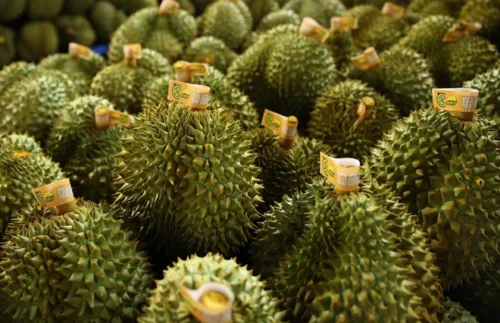
In terms of flavor, experts suggest that Lao durians are unlikely to differ significantly from those grown in Vietnam or Thailand. Due to similar climate conditions and rainfall patterns, durian quality across these countries is expected to be comparable when entering the export of durian to China. As a result, durian competition will largely focus on pricing, volume, and delivery reliability.
Currently, more than 90% of the world’s total durian exports are consumed in China the largest and most lucrative market for this tropical fruit. In China, a single 6kg durian can sell for up to 200 yuan. This immense demand makes the export of durian to China a strategic priority for many countries, further intensifying durian competition.
Increasing Pressure on Vietnam
According to Chinese customs data, durian imports reached a record value of USD 6.99 billion in 2024. Thailand accounted for approximately 57% of imports, while Vietnam ranked second with 38%. The entry of Laos into the market is expected to intensify durian competition, forcing Vietnamese exporters to optimize costs and improve quality to maintain growth in the export of durian to China.
Meanwhile, durian supplies from Malaysia, Cambodia, and the Philippines are generally more expensive. As a result, Laos is viewed as a direct competitor to Vietnam in the mid-priced segment currently the most competitive segment in the durian competition landscape.Durian trade is also part of broader economic cooperation between China and Southeast Asia. During his visit to Laos in October 2024, Chinese Premier Li Qiang stated that China would continue strengthening connectivity under the Belt and Road Initiative. This further strengthens the foundation for Laos’s export of durian to China, while adding pressure to regional durian competition.
Laos currently has approximately 20,000 hectares of durian plantations, with around 10,000 fruit-bearing trees. By 2029, the country is expected to harvest about 270,000 durian trees, producing an estimated 24,300 tons. Although this volume is still smaller compared to Vietnam and Thailand, it is sufficient to disrupt the export of durian to China and intensify durian competition in the coming years.