Tiếng Việt
 中文 (中国)
Strong export growth in the first months of 2026 indicates that Vietnam’s durian industry is gradually shifting from a race for output to competition based on quality, added value, and compliance with international standards.
Positive Signals in Early 2026
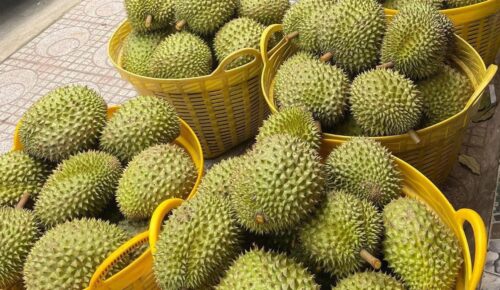
Across major durian-growing regions in the Mekong Delta and Southeast Vietnam, harvesting activities have become more vibrant than ever. From Dong Thap and Vinh Long to Dong Nai and Lam Dong, durian farms, packing facilities, cold storage centers, and shipping ports are operating at full capacity. Long lines of container trucks heading to border gates and seaports reflect a positive signal for Vietnam’s durian sector.
The industry is entering a new phase of growth that is more professional, structured, and sustainable. According to customs statistics, Vietnam’s durian exports reached approximately USD 221.7 million in the first quarter of 2026, marking a remarkable 230% increase compared to the same period in 2025.
Besides China, several demanding markets also recorded strong growth, including the United States with over 107% growth, South Korea nearly 262%, Australia more than 40%, and Japan close to 12%.These figures demonstrate that Vietnam’s durian industry is steadily improving its technical standards, product quality, and adaptability to international markets.
Frozen Durian Creates New Opportunities
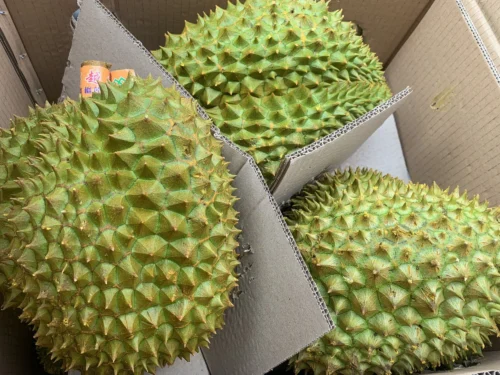
One of the brightest highlights of the industry is the rapid expansion of frozen durian exports. While frozen durian exports totaled just over 4,600 tons in 2024, the figure skyrocketed to more than 91,000 tons in 2025, nearly 20 times higher.
In the first quarter of 2026, the average export price of frozen durian reached around USD 4,302 per ton, over 20% higher year-on-year and approximately 18–22% higher than fresh durian prices.Industry experts believe that the expansion of export protocols for frozen durian products is opening significant opportunities for Vietnam’s durian sector.
Unlike fresh durian, which heavily depends on harvest seasons and has limited shelf life, frozen durian offers longer storage capability, reduced logistics pressure, and easier access to premium international markets.This transformation is helping Vietnamese durian move deeper into global processing and distribution chains.
Quality Becomes the Industry’s Core Focus
If businesses previously focused mainly on increasing production volume, quality has now become the central keyword of Vietnam’s durian industry. Farmers across many provinces are changing cultivation practices by improving production records, optimizing fertilizer use, controlling chemical residues, and strictly following export-oriented technical standards.
The linkage between enterprises and farmers is also becoming stronger, creating integrated production control systems from farms to processing factories. In Truong Thanh Commune of Can Tho City, five durian cooperatives have been established with more than 162 hectares and 138 participating households.Similarly, in Phu Trung Commune of Dong Nai Province, 258 hectares of durian farms have already received official growing area codes for export purposes.