

 Tiếng Việt
 中文 (中国)
Demand for durian in China continues to surge, intensifying competition among Southeast Asian exporters seeking to dominate the lucrative market. In 2025, Vietnam significantly expanded its presence in China’s durian market, while Thailand long considered the leading supplier recorded little growth. According to Chinese customs data, Vietnam exported $3.44 billion worth of durian to China in 2025, up from $2.94 billion in 2024, representing an increase of about $500 million in a single year.

Analysts say Vietnamese durian has gained competitive advantages in recent years. The country’s supply network – including growers, traders, storage facilities and logistics providers – has expanded rapidly.Vietnam also benefits from its 1,280-kilometer land border with China, which significantly reduces transportation time and logistics costs compared with maritime routes.
Thailand, by contrast, does not share a land border with China, making its exports more dependent on sea transport.According to Lim Chin Khee, advisor to the Malaysian Durian Academy, shorter transportation distances give Vietnamese durians a clear advantage in both cost and freshness.
Even as China tightened inspection standards for durian imports, consumer demand remained strong throughout the past year. Lim noted that Vietnamese durians offer a balanced combination of price and supply stability, making them attractive to Chinese importers compared with products from Thailand or Malaysia.“Vietnam built strong export momentum before stricter inspections were introduced. China had already approved a large number of Vietnamese orchards and packing facilities, enabling rapid growth,” Lim said.
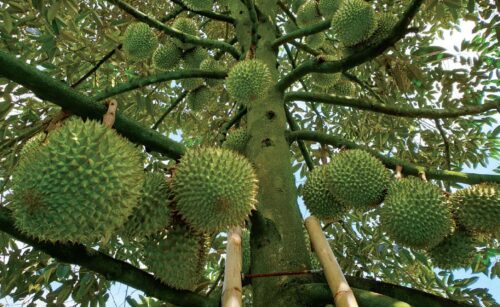
Currently, Vietnam has about 1,200 registered growing areas and 180 packing facilities approved to export durians to China.Industry analysts believe that if Vietnam maintains product quality and complies with China’s regulatory standards, the country’s durian exports could exceed $4 billion in 2026.
Thailand, meanwhile, saw its exports to China remain largely flat in 2025. The country’s durian shipments to the Chinese market totaled just under $4 billion, showing little growth compared with the previous year.
According to South China Morning Post, Nguyen Thanh Trung, a researcher at Fulbright University Vietnam, said cooperation between the Vietnamese and Chinese governments to resolve phytosanitary issues in 2025 helped maintain export momentum.“I believe Vietnamese durians could surpass Thailand in volume and possibly even quality,” Trung said.
China currently consumes more than 90% of the world’s exported durian, where the fruit is considered a premium delicacy and often used as a gift for special occasions such as birthdays, weddings and festivals.As demand continues to grow, competition among Southeast Asian exporters including Vietnam, Thailand, Malaysia, Cambodia, Laos and the Philippines is expected to intensify in the coming years.